
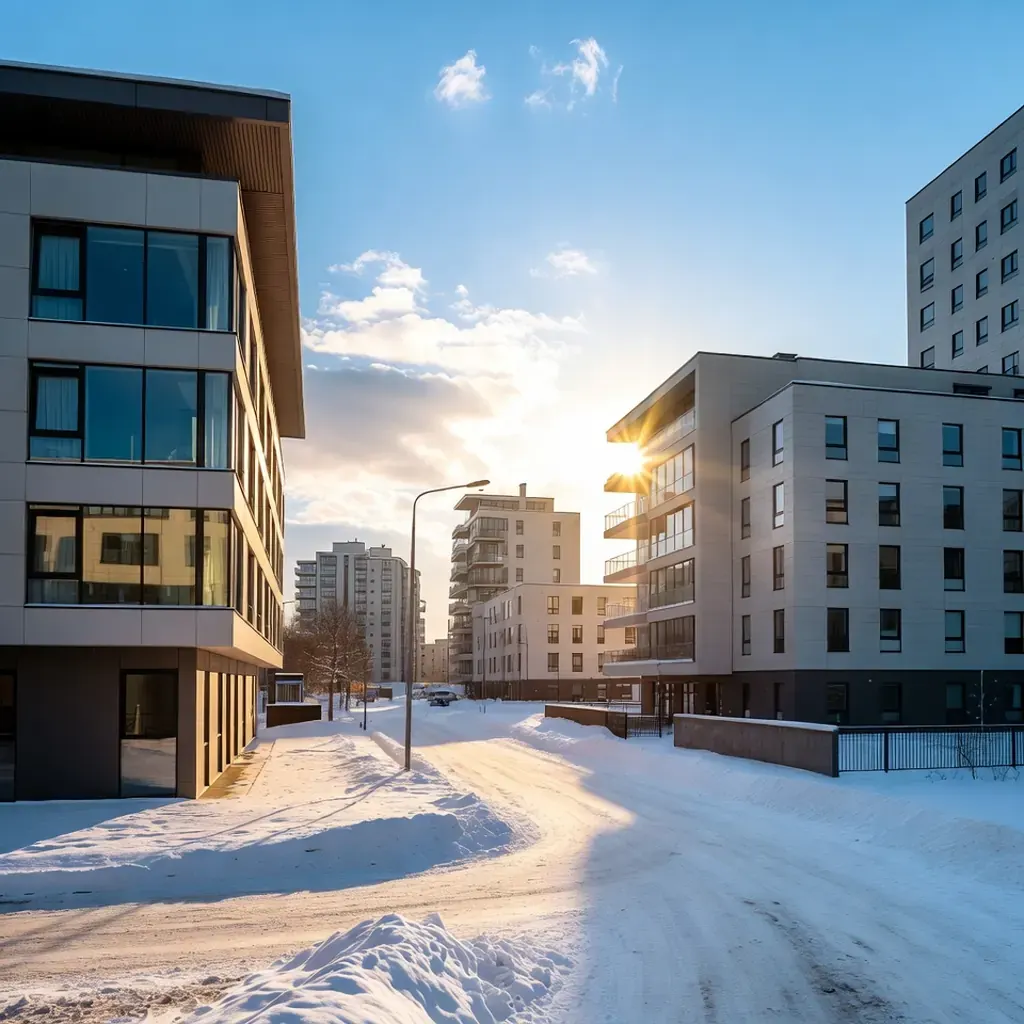
It’s 3:30 p.m. in January. You’re at a restaurant and the sunlight is shining straight into your eyes. We tend to associate glare with summer, yet winter glare is often stronger, and your windows can play a part. Here’s why it happens and how you can get more comfortable while keeping daylight.
The winter sun stays lower throughout the day
At the latitude of Laval and Montréal, about 45° N, the sun reaches roughly 66–68° above the horizon at noon in summer and only about 19–21° in winter. During winter, it stays low from sunrise to sunset. Its rays arrive at a shallow angle and can shine straight through a window into your line of sight. That’s why you might be squinting in the living room at 3 p.m. in February and comfortable at the same hour in July.
Winter sunlight reaches deeper into your rooms
In summer, roofs, eaves and balconies can block some high-angle sun, limiting how far it reaches into the room. Winter rays can come in at an angle of 17–19° and reach well into a living room, dining room or shop. South-facing windows can receive more direct sun in winter and the shoulder seasons, depending on their exposure. That low, bright light can spill across a room at the hours you use it most.


Snow reflects the winter sun
Solar film forms a discreet layer on existing glass. Depending on the product, it can reduce some solar heat, cut glare and filter UV rays.
Entreprises JN offers films that can block up to 99% of UV rays while keeping daylight. The goal is a more comfortable room where you can watch TV with less glare, work near a window, enjoy a bright living room or feel less heat in an area exposed to direct sun.
Film installs on existing windows. It’s a targeted improvement that avoids major construction or replacing the glazing.
To reduce solar heat and glare and help protect your interior from UV, explore our solar window film and the options suited to your glazing.
Glare and fading in businesses
In restaurants, shops, waiting rooms and reception areas with large windows, winter glare can make customers squint, ask to switch tables or cut their visit short. Employees who work in front of windows, including cashiers and receptionists, can face hours of glare every day. That can contribute to visual fatigue, headaches and trouble concentrating. Products displayed near windows can also fade with UV exposure throughout the year. A compatible solar film can improve visual comfort and help protect items on display. Explore our solar window film options.
What about at home?
In a south-facing living room, reading nook or home office, winter sunlight can make TV hard to watch or leave reflections all over a computer screen. Reading next to a large window for an hour may also tire your eyes. Closing the blinds can help with glare but costs daylight at a time you’re likely to want it. Interior blinds can offer shade without providing the same solar heat or UV control as a suitable film.

Solar film also reduces reflections from winter sunlight
Solar film works year-round. In winter, it helps soften low-angle glare while keeping natural light. A film that blocks up to 99% of UV rays can help protect furniture and merchandise from fading, even in January. In summer, a suitable film can also reduce incoming solar heat.
Why the glare happens
Winter glare comes from direct rays at a low angle and from light reflected off snow. Solar film installed now can help you use the room in winter and reduce solar heat when summer returns.
Get comfortable while keeping daylight
Tell us which windows cause the problem. Look at our solar window film options or request a quote for a solution suited to your building, in Laval or elsewhere in Québec.
- Sun angle of 66° in summer and 19° in winter at 47° N https://www.fiabitat.com/le-brise-soleil/
- Low sun throughout the day in winter and more glare in fall and winter https://www.allaboutvision.com/fr/lunettes/lunettes-de-soleil/lunettes-soleil-protection-uv-hiver/ and https://weather.com/features/news/2026-01-26-sun-glare-seasonal-risks-driving
- Deeper sunlight penetration in winter, roughly 17° versus 60° in summer, and stronger winter solar exposure on south-facing façades https://energieplus-lesite.be/theories/eclairage12/physique-lumiere/eclairage-naturel-et-ses-variations/
- Fresh snow can reflect up to 95% of incoming radiation https://www.meteosuisse.admin.ch/meteo/meteo-et-climat-de-a-a-z/albedo.html
- Fresh snow can reflect 80–90% of UV radiation https://uvaindex.org/learn/reflected-uva-snow-sand-water.html
- Glare risk and sunlight reaching deeper through east-facing and west-facing glazing https://guidebatimentdurable.brussels/limiter-charges-thermiques/limiter-gains-solaires
Ready to start your window film project?
Tell us what you’d like to improve, whether it’s heat, privacy, security or style. We’ll help you take it from there.