
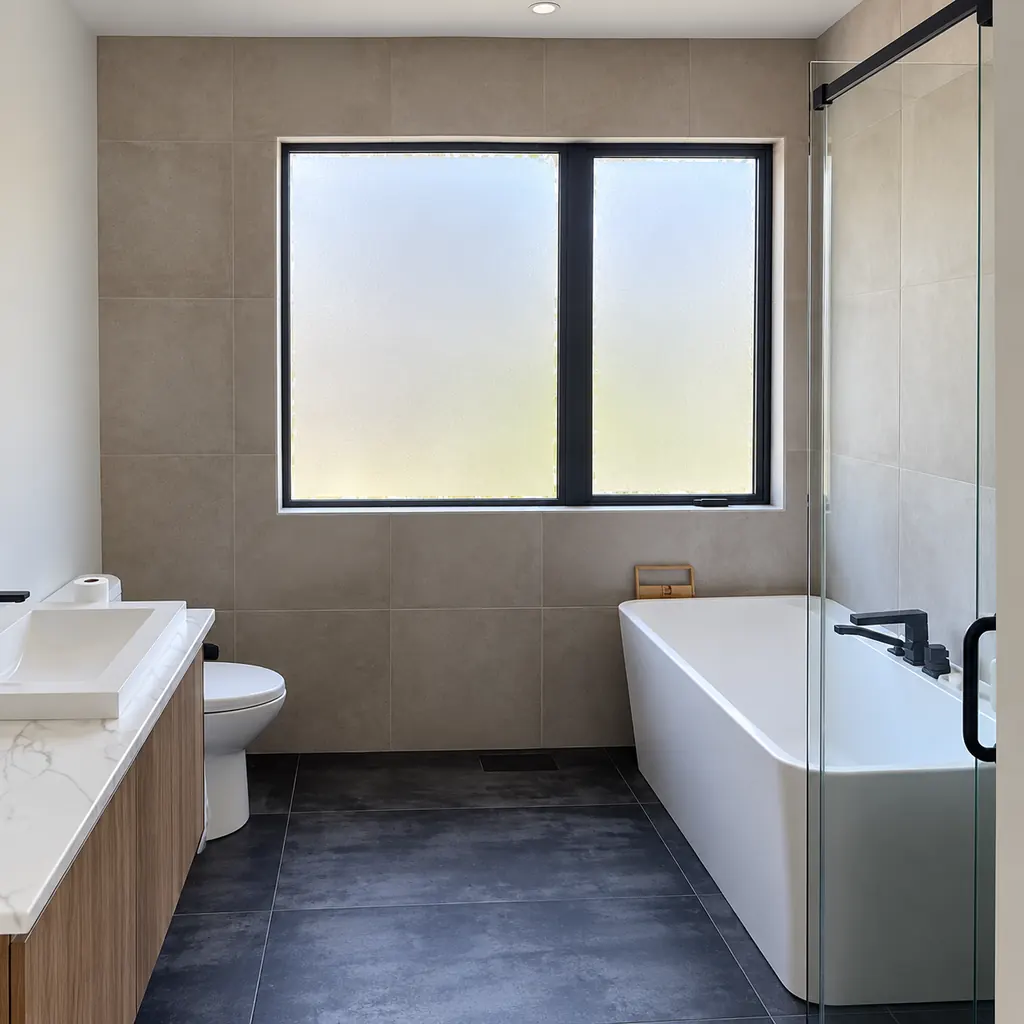
Several treatments can add privacy at home or at work. Blinds and curtains are familiar choices, and decorative window film is another option.
Film can change the look of the glazing, limit the view through it and keep some natural light without adding fabric or hardware in front of the window.
Which treatment makes sense for your space?
Think about how much privacy and light you want, the look of your interior and the way you use the room.
1. Decorative film goes directly on the glass
Decorative film is applied to an existing glazed surface. Finishes include frosted and etched-glass effects, geometric patterns and custom designs.
It’s especially useful when you want to make it harder to see through a window or partition while keeping a modern look.
Advantages of decorative window film
- A clean look without a rod or mechanism in front of the glass.
- Natural light that certain films can diffuse while screening direct views.
- A choice of finishes including solid films, decorative bands and patterns.
- Use on interior glazing such as glazed doors, office partitions and some residential windows.
- Customization for projects that call for a pattern or logo.
Decorative film is an option when you want more privacy and a finish that still feels like glass.
What are its limitations?
Decorative film stays on the glass whenever you use the room. Frosted film generally obscures the view in both directions.
It provides a fixed level of privacy. A blind can be opened or closed as needed.
Film does little for sound and its visual privacy varies with lighting. Choose a finish suited to the room’s use.
2. Blinds give you everyday flexibility
Blinds let you change how much of the window is covered according to your needs.
Depending on their design, they can let in plenty of light, filter the brightness or block much of the view.
Advantages of blinds
- You can adjust the amount of light throughout the day.
- Certain models offer good glare control.
- They suit windows where you want to switch between a clear view and privacy.
- They come in a range of styles, materials and colours.
Limitations of blinds
Blinds add a visible element in front of the glass and need installation space. Some models need regular dusting.
How well they work varies by model, position and window coverage. If you mainly want a discreet finish that looks consistent across the glass, another treatment may suit you better.
3. Curtains offer a versatile decorative treatment
Curtains change the feel of a room and cover a window to an extent that depends on how transparent the fabric is.
Sheers filter light and soften the view through the window. Thicker fabrics can provide more darkness when closed.
Advantages of curtains
- They add texture and colour to the room.
- They can cover a large area of glass.
- Changing the fabric is an easy way to update the look.
- Some types can darken a bedroom or media room.
Limitations of curtains
Curtains take up space around the window and may cover some of the glazing even when open.
Care depends on the fabric. Privacy likewise depends on thickness and the lighting. Lightweight sheers let you see more through the window than opaque curtains.
4. Comparing decorative film, blinds and curtains
- Privacy depends on the film type, the blind model and setting, or the curtain fabric and position.
- Daylight can be diffused by film, adjusted with some blinds or filtered to different degrees by curtain fabric.
- The view outside is limited by frosted film and generally available when blinds or curtains are open.
- Appearance varies from film integrated with the glass to functional decorative blinds and the textile look of curtains.
- Everyday adjustment is generally available with blinds and curtains, while film stays in place.
- Custom patterns are available with some films, blind models and curtain fabrics.
- Care depends on the film and manufacturer instructions, the blind material or the curtain fabric.
The right choice depends on the window, room and habits of the people using it. Different rooms can call for different treatments.
5. Choosing a treatment for each room
Bathroom
If you want to limit the view through a window while keeping the room bright, consider frosted film compatible with the glass.
Check how much privacy is needed, especially with the room lit at night. Fixed decorative film offers a steady level of privacy. A blind can be opened when you want a clear view.
Glazed front door
Decorative film can keep the entry looking bright without adding a curtain in front of the door.
Decide which areas need more privacy and which you want to leave clear.
Office or meeting room
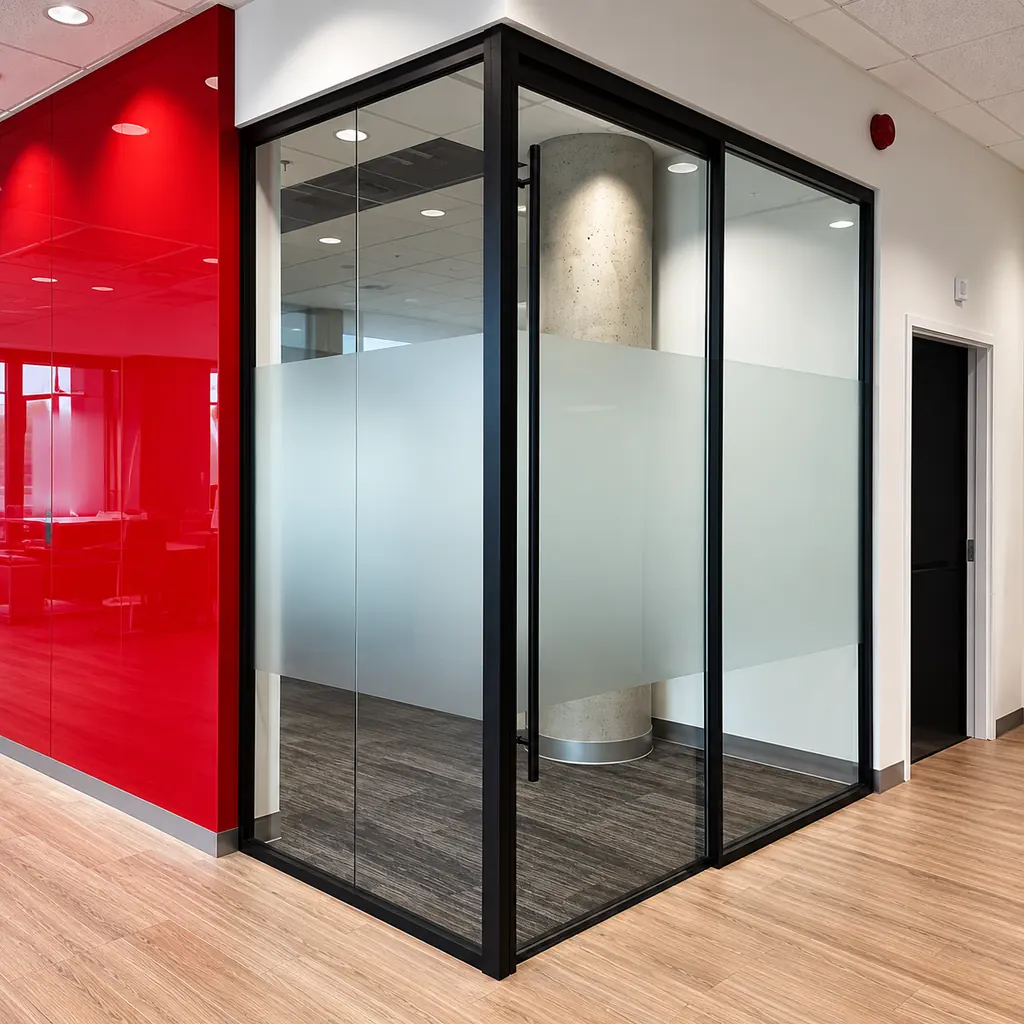
Frosted or patterned film can screen the view through a glass partition while maintaining a professional look.
It’s worth considering if blinds or curtains don’t suit the room’s design.
Living room with a large window
Blinds or curtains may be a good fit if you want an unobstructed view in the daytime and control over the light at other times.
Decorative film can be a good option if you mainly want to screen a specific area of the glazing.
Bedroom
Consider blackout curtains or some types of blinds if your priority is keeping the room dark for sleep.
Decorative film primarily changes the look of glass and how much you can see through it. Choose a blackout treatment when the room needs to be substantially darker.
6. Can decorative film work with blinds or curtains?

Yes. The treatments serve different purposes and can complement each other.
For example, frosted film on the lower part of a window can screen the view while the top stays clear. Then you can adjust blinds to change the light or add coverage when needed.
In an office, decorative film can go on an interior glass partition while blinds are used on the exterior windows.
Decide what each treatment needs to do before choosing your products.
7. How does the cost of decorative film compare?
Cost depends on window measurements, the product, the complexity of the installation and the expected result.
Decorative film prices can vary with the film, the area to be covered and the characteristics of the glazing.
Blinds and curtains can also vary considerably by material, size and mechanism.
Compare treatments that meet the same need and look beyond the initial price. If you’re weighing a few options, an assessment of your windows can help narrow them down.
Find a decorative film that suits your windows
Each treatment has advantages. Blinds and curtains generally let you adjust coverage day to day. With decorative film, the finish sits directly on the glazing.
If you want to screen views, keep natural light or update a glass door or partition, consider decorative window film for your project.
Planning a home or business project?
Contact Entreprises JN to discuss your decorative film needs and request a quote for your project.
Ready to start your window film project?
Tell us what you’d like to improve, whether it’s heat, privacy, security or style. We’ll help you take it from there.